
The Imperial Family’s Domestic Ideology
The Zone of InterestThis thread follows the Bormann household as a private stage where political myth, reproduction, and personal ambition persist despite defeat.
increasing Bearing strength in each event
 decreasing
Bearing strength in each eventdecreasingA Christmas Household
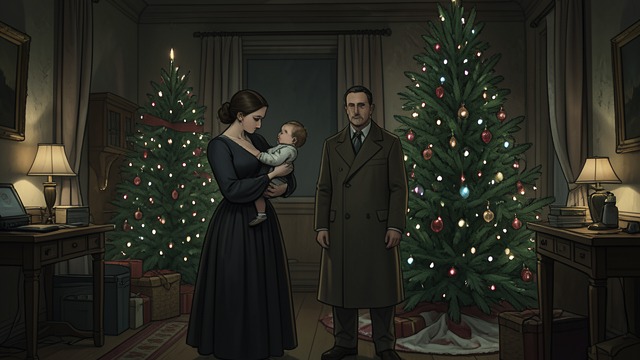
A Christmas Household
Family life under political names
Thomsen visits Gerda Bormann and her children, whose names honor prominent Nazi leaders. The home is busy with meals, presents, and preparations for another child.
Ideology enters family identity
The children’s names and the household’s expectations turn family life into a continuation of state ideology. Domestic affection is present, but it is entangled with political ambition.
The Medal and the Dead Children
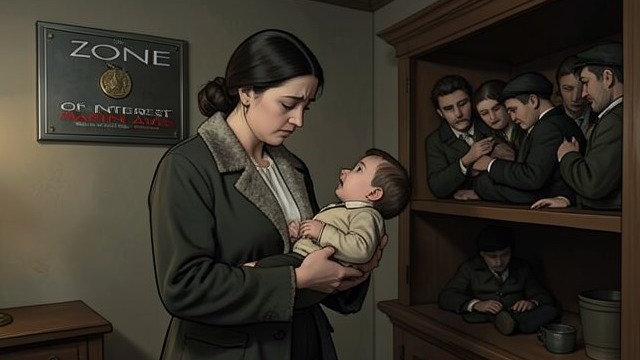
The Medal and the Dead Children
Motherhood is counted politically
Gerda explains that dead children count toward the motherhood medal she hopes to receive. The award measures a woman’s worth through a state-approved model of reproduction.
Death becomes an accounting category
Her matter-of-fact calculation reflects a world in which even loss is made to serve an ideological score. Thomsen’s gentle irony cannot undo the values she accepts.
The Chief’s Household Preferences

The Chief’s Household Preferences
Political power meets domestic detail
Bormann discusses the removal of a cook because of Jewish ancestry, then reveals that the leader’s food preferences complicate the decision. Political persecution is filtered through the practical arrangements of an elite household.
Persecution remains the priority
The convenience of the regime’s leaders determines how policy is applied. Private routines become reasons to intervene in the lives of people with less power.
Bormann’s Influence Campaign
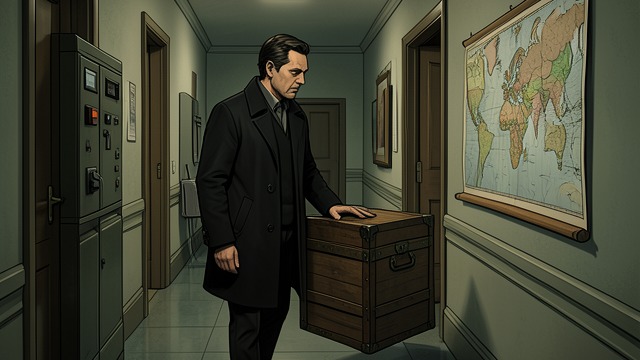
Bormann’s Influence Campaign
Succession is managed behind the scenes
Bormann describes obstructing Albert Speer through Party networks and controlling the movement of resources. He views succession as a struggle for power within the regime.
War is not his only priority
His attention turns to preserving personal authority while the country faces military defeat. The domestic and bureaucratic plotting contrasts with the front-line suffering around Germany.
The End of the Bormann World
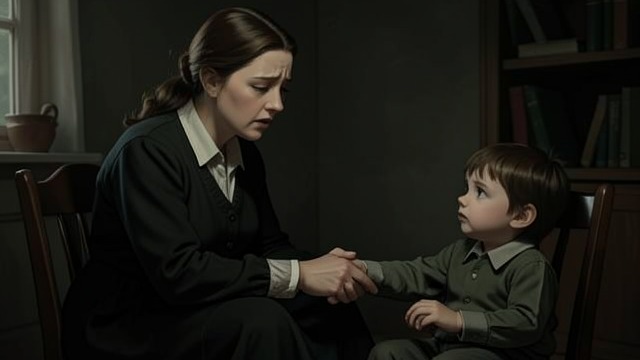
The End of the Bormann World
Gerda mourns the regime
After the war, Gerda lies ill in a camp that no longer operates as a Nazi concentration camp. She tells Thomsen that the end of National Socialism is almost impossible to bear.
Power persists as memory
She continues to speak of Martin’s influence and the leader’s importance, even after their political world has collapsed. Her attachment shows how ideology survives in private feeling.
Christmas 1942, at Pullach
Christmas 1942, during a conversation in the kitchen
Late December 1942, during Bormann’s discussion with Thomsen
Late December 1942, during Thomsen’s visit to Pullach
Spring 1946, in the Bolzano hospital
